I always wanted to be a farmer, as did my two younger brothers. With the help of our parents, we were able to realize that dream. Working with family can be both exhilarating and exhausting. Once in a while, disagreements happen, and you learn how to apologize, how to compromise, and how to respect different ideas. Being self-employed also taught us financial responsibility from an early age. Those valuable life experiences have helped me navigate the ups and downs of life on council.
Re-elect
Hugh Aerts
Ward 3 CouncillorMiddlesex Centre
“Think Twice. Speak Once.”
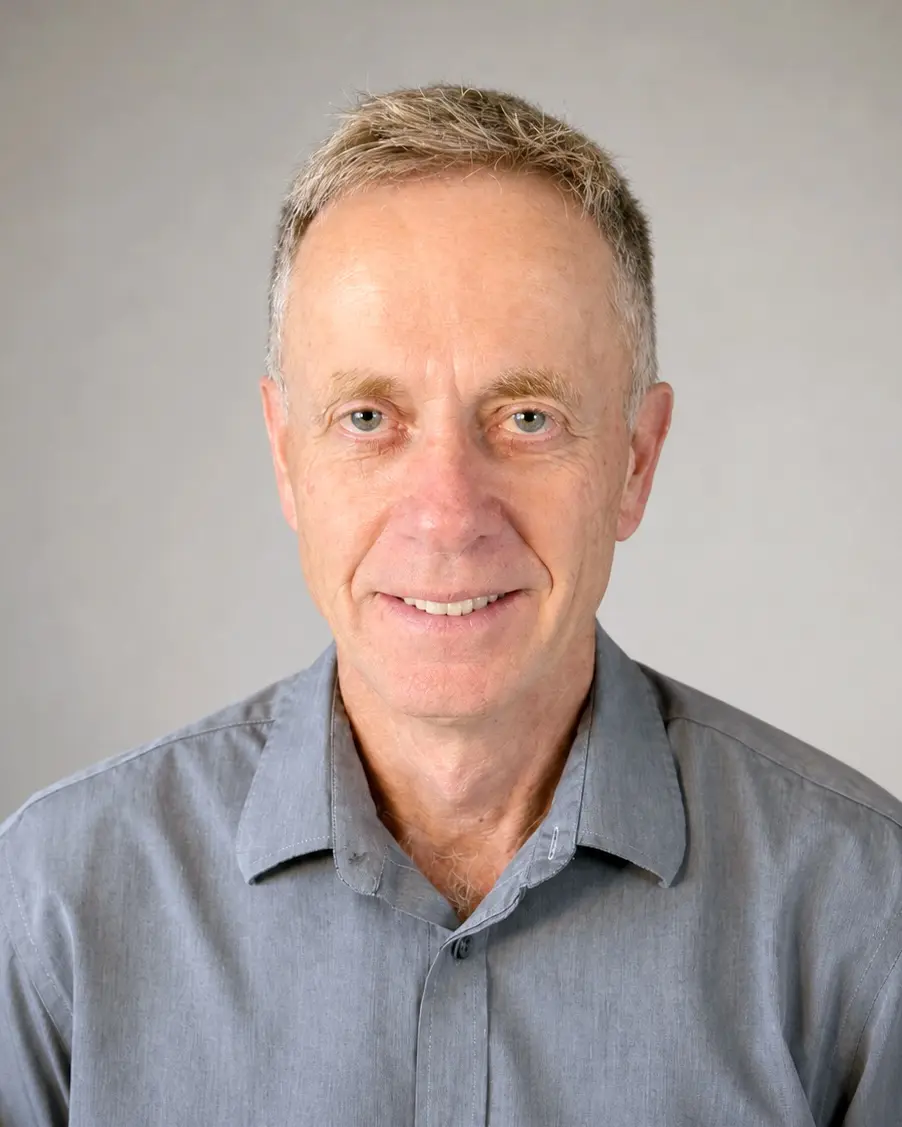
My name is Hugh Aerts, and I am running for re-election as Councillor for Ward 3 in the Municipality of Middlesex Centre.
Election DayMonday, October 26, 2026
By the time the council meeting begins, I have thoroughly done my homework and, for the most part, have already had my questions answered.
Who am I?
My roots in Middlesex Centre run deep
In the early 1950s, my parents immigrated to Canada in search of an opportunity to farm and build a better life. I grew up with one sister and two brothers, and we spent our childhood together here in the community.
When I was seven months old, our family moved to Charlton Drive, where I have lived ever since. This community has been my home for my entire life, and I am proud to have watched it grow and change over the years.
I attended Valleyview Public School and later Strathroy District Collegiate Institute. Growing up with my family in Ward 3 has given me a strong connection to the people and the community I am seeking to continue representing.
Eight years ago, I thought about running for council because I wanted to give back to my community. However, it was never really something I had seriously considered doing. At the time, I simply had a little more free time and an opportunity to get involved, so I decided to take a chance and put my name forward. Having a mentor who taught me proper governance also made the process much easier and gave me the confidence to step into the role.
I really had to think hard about running for a third term on council because I know how much this job demands and how much it can take from you. But I also know how rewarding it is to have the opportunity to serve our community, give a voice to the people I represent, and work towards making our community a better place. I believe in doing what is right, even when it isn’t always the easiest choice, and that is why I feel like I’m not quite done yet.
Travel and perspective
Experiences from every continent
Travel is an important part of my life and has given me some of my most meaningful experiences. I have set foot on every continent, and many of my trips involve hiking and adventure. I am a solo traveller, and when I come across something that catches my interest, I book it and go.
I often arrive at the starting point and join a group of strangers from different countries and backgrounds. Along the way, I not only experience a new country but also meet people with different perspectives, stories, and ways of life.
These experiences have broadened my perspective and taught me how to navigate and appreciate a diverse range of personalities and cultures. They have also changed the way I look at life and reminded me how fortunate we are to live in Canada. I often find myself thinking that we can easily take that for granted.
From Hugh’s travelsA year in the life
How I approach the role
I think the best way to explain my role as a councillor is to give you a little insight into what that process actually looks like.
For each item on the council agenda, I make sure to do my due diligence and fully understand the issue before casting my vote. One of the hardest parts of this job is knowing that there are rules and responsibilities we have to follow, even when those decisions may not always be popular.
23
regular council meetings
11
Committee of Adjustment meetings
650
hours logged per year
12.5
hours per week on average
The council calendar
In the course of a year, there are 23 regular council meetings and 11 Committee of Adjustment meetings.
The agenda comes out on Thursdays, giving all councillors six days to read and research it. I consider anything under 250 pages to be light reading. Once you get over 800 pages, you had better keep the coffee pot on.
Reading everything
I take my time to read everything. If there is a 150-page report with an eight-page summary, I read the entire report and the summary. As I read, I make notes on questions I have and on things I do not understand.
I take the same approach for agendas from the Lower Thames Valley Conservation Authority and the Green Lane Landfill Committee. With any luck, and depending on how busy we are on the farm, I have my reading done by Sunday night. For any location mentioned in the reports, I try to drive there to see the property firsthand.
Seeking clarification
On Monday morning, if there is anything on the agenda that needs further clarification, I reach out to the staff member who prepared the report. I believe in having open conversations so nobody is caught off guard. If there is something in a report that I have concerns about or disagree with, I let the staff member know ahead of time that I intend to raise the issue at the council meeting.
At the meeting
By the time the council meeting begins, I have thoroughly done my homework and, for the most part, have already had my questions answered. Sometimes I’ll ask a question during the meeting to provide the public with a little more clarity or context. Other times, I choose to listen and hear the perspectives of my fellow councillors because I believe there is value in listening rather than just speaking for the sake of speaking.
Planning decisions
When it comes to planning issues, it is important to recognize that if the proposal is in the Middlesex Centre Official Plan, the Middlesex County Official Plan, or the Provincial Policy Statement (PPS), some variation of the application may be permitted, provided it meets the municipality’s established criteria.
I have had to make difficult decisions where the rules and established policies ultimately determined the outcome. In doing so, I have inevitably disappointed and upset people, and that is never an easy position to be in. However, knowingly going against policy simply to appease constituents is not responsible leadership.
Responsibility to residents
Once council has made a decision, regardless of how an individual member voted, we have an obligation to respect and publicly support that decision. That is part of the responsibility of serving on council and maintaining public trust.
Part of this job is also about listening to our constituents. When people reach out to me, I take the time to hear their concerns, answer their questions and, when needed, follow up to make sure they receive the information or help they are looking for.
When I started on council eight years ago, I was curious about how much time that would involve, so I decided to keep a logbook. I have been averaging 650 hours per year, which works out to 12.5 hours per week.
Council roles
During my second term
- Member of the 2023 and 2026 budget committees
- Director for the Lower Thames Valley Conservation Authority
- Member of the Green Lane Landfill Committee
On council now
Current Council Matters
The Official Plan
Our Official Plan occupies a unique position. Parts of it are still under appeal before the Ontario Land Tribunal, and there have been significant changes to the Provincial Policy Statement since council adopted it on May 18, 2022. It has been a process that has taken some time.
Property assessments
In the past, the Municipal Property Assessment Corporation (MPAC) updated property assessments every four years. More recently, however, this has not been the case, with the last assessment having been conducted in 2016. A long delay in updating assessments can eventually create inequities in taxation.
Road culverts
Some of our newer road culverts are deteriorating more quickly than expected—in some cases, faster than older culverts. As a result, the replacement cycle for road culverts is becoming shorter, which will have implications for our asset management plan.
Hamlet development
Hamlet boundaries are currently frozen, and any new development in the hamlets will be infill. The Active Transportation Plan mentions possible sidewalks in the hamlets. However, this issue needs to be discussed with residents.
Continuation of historical provincial and federal funding programs
In 2026, Middlesex Centre received:
- Ontario Municipal Partnership Fund
- $1,403,400
- Canada Community Building Fund
- $619,895
- Ontario Community Infrastructure Fund
- $2,109,716
A loss of these programs will severely impact future budgets.
Development charges
Development charges pay for new growth. If the charges are reduced, the monetary shortfall will need to be covered by either the municipality or the province.
Conservation authorities
The provincial government is in the process of merging the existing 36 conservation authorities into nine boards. I believe the government is creating an extra level of bureaucracy and will create a system that costs more and is less in tune with local issues.
Landfill capacity
At current rates, it is projected that in the next 10 to 15 years, Ontario will max out its existing landfills.
Looking ahead
My Thoughts on Moving Forward
Small business opportunities
We need to create more opportunities for small businesses—such as small-engine repair, landscaping, electrical services, and other trades—to operate locally. These businesses often require a combination of a workshop, yard space, and a residence that can also serve as an office. They play an important role in our community by hiring locally, spending locally, and supporting other local businesses and community initiatives. Providing more appropriate spaces for these businesses to establish and grow would strengthen our local economy and community.
Diversifying the property tax base
We need to diversify our property tax base; currently, close to 80% of Middlesex Centre’s property tax revenue comes from residential housing.
Additional Residential Units
We are beginning to see interest in Additional Residential Units (ARUs). We need to ensure that they fit in with our rural and urban landscape and that the provisions are applied in keeping with their intended purpose.
Appropriate development
We need to ensure that we are working with developers that have projects appropriate for Middlesex Centre.
Delaware sewage connection
At some point, Delaware needs to be connected to the sewage treatment plant in Komoka to support future development and expansion in Delaware.
Agriculture and community
I have farmed all my life, and I have witnessed a shrinking agricultural community. My concern is a widening disconnect between agriculture and the rest of the municipality. Building understanding between our farming and residential communities is essential to ensuring both can thrive together.
Volunteer firefighters
In 2026, Middlesex Centre had 118 volunteer firefighters. We have to make sure that we continue to encourage and support our volunteer fire departments, as their commitment and service are essential to the safety and well-being of our community.
The Strong Mayors Act
One final thought for you to consider: for a mayor to use the Strong Mayors Act, some or all parts of the council are dysfunctional. That authority has not been necessary in Middlesex Centre, as council has worked well together to resolve issues and reach decisions.
Let’s talk
Contact Hugh
Part of this job is also about listening to our constituents. When people reach out to me, I take the time to hear their concerns, answer their questions and, when needed, follow up to make sure they receive the information or help they are looking for.